
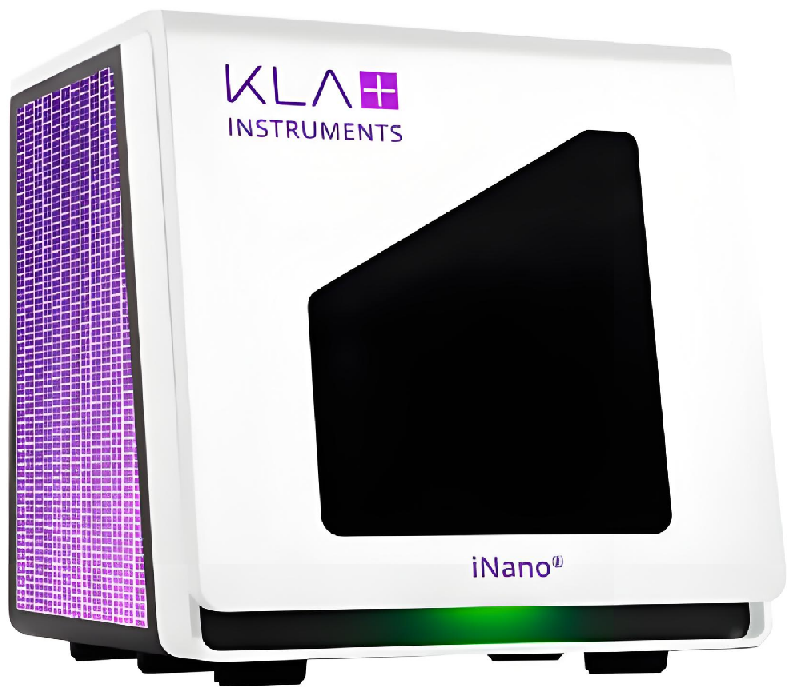
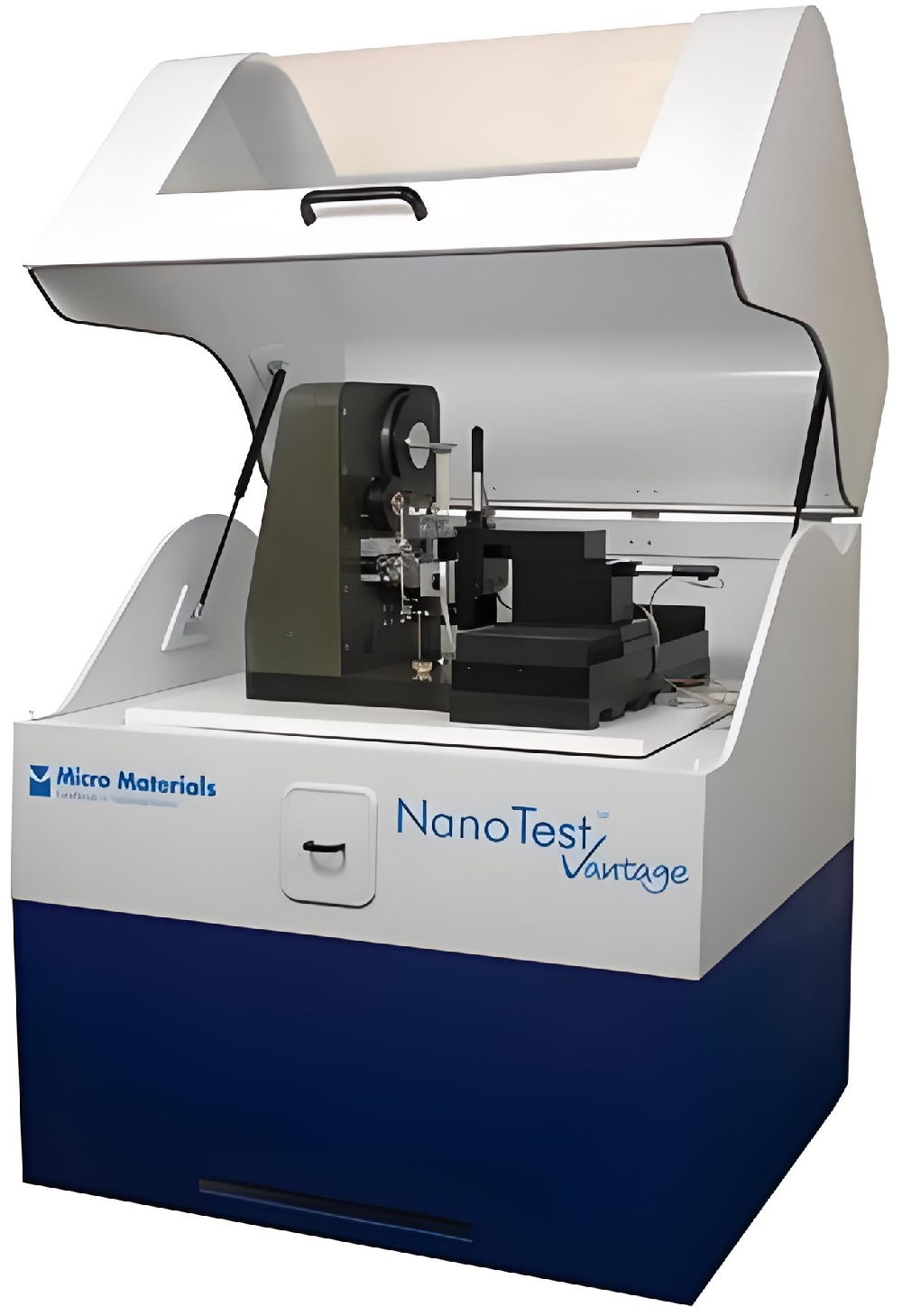
Brief description:Nanoindenters are mainly used to measure hardness and elastic modulus at the nanoscale. They can be used to study or test properties of nanomaterials like thin films, including contact stiffness, creep, elastic work, plastic work, fracture toughness, stress-strain curves, fatigue, storage modulus, and loss modulus. They are suitable for testing both organic and inorganic materials, whether soft or hard, like PVD, CVD, PECVD films, photoresist films, painted glazes, optical films, microelectronic coatings, protective films, decorative films, and more. The substrate can also be soft or hard, including metals, alloys, semiconductors, glass, minerals, and organic materials.
Industry Applications:Surface hardness of the material, hardness of the coating, and modulus characterization.
Detailed
Nanoindenters are mainly used to measure hardness and elastic modulus at the nanoscale. They can be used to study or test properties of nanomaterials like thin films, including contact stiffness, creep, elastic work, plastic work, fracture toughness, stress-strain curves, fatigue, storage modulus, and loss modulus. They are suitable for testing both organic and inorganic materials, whether soft or hard, like PVD, CVD, PECVD films, photoresist films, painted glazes, optical films, microelectronic coatings, protective films, decorative films, and more. The substrate can also be soft or hard, including metals, alloys, semiconductors, glass, minerals, and organic materials.
Product inquiry