
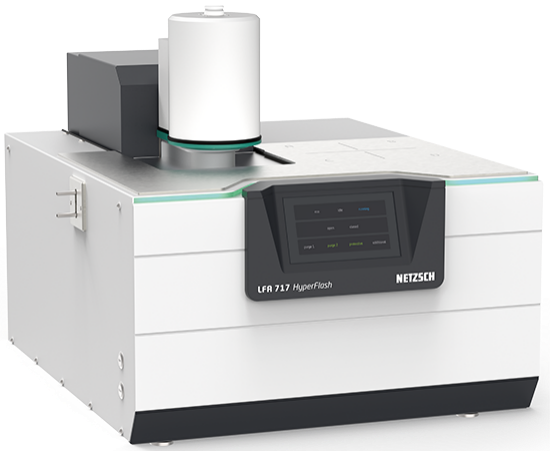
Brief description:1. Laser Flash Analysis (LFA) Laser Flash Analysis is a non-contact, non-destructive method. Based on the principle of heat diffusion, it works by sending a high-energy laser pulse to the surface of the sample in an instant, heating the surface to a temperature far above its initial state in a very short time. Then, an infrared detector is used to monitor and record how the temperature on the back of the sample changes over time. Since the speed at which heat spreads inside the sample (i.e., thermal diffusivity) is directly related to the material's thermal diffusion coefficient.


Detailed
1. Laser Flash Method (LFA)
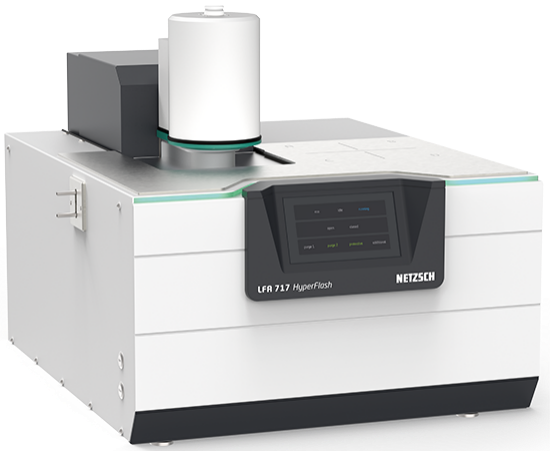
The laser flash method is a non-contact, non-destructive technique. Based on the principle of heat diffusion, it works by firing a high-energy laser pulse at the surface of a sample in an instant, which heats the surface to a temperature far above its initial state in a very short time. Then, an infrared detector is used to monitor and record how the temperature on the back of the sample changes over time. Because the speed at which heat spreads inside the sample (i.e., thermal diffusivity) is proportional to the material's thermal diffusion coefficient, analyzing the temperature-time curve allows the thermal conductivity and thermal diffusivity of the material to be indirectly calculated.
The laser flash method can measure small sample sizes in just a few seconds to a few minutes, making it especially suitable for expensive or hard-to-produce materials, as well as testing under high-temperature conditions. It can be used for solids, liquids, pastes, and powders. However, it only measures thermal conductivity in the thickness direction of the sample, so it’s not accurate for anisotropic materials. Data analysis is also relatively complex, relying on heat diffusion theory and requiring professional knowledge and software. Additionally, sample preparation needs to be precise, with flat surfaces and proper dimensions.

2. Hot Wire Method (HW)
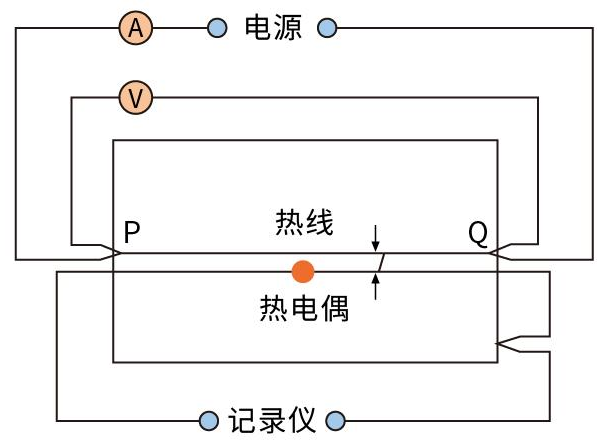
The hot wire method is a transient testing method for measuring the thermal properties of materials. During the measurement, the temperature of the hot wire and the surrounding sample will rise, and the rate of temperature increase is related to the thermal conductivity of the sample. During testing, a certain voltage is applied to both ends of the hot wire to generate heat, and then the temperature change of the hot wire itself or a section of the sample parallel to the wire is measured over time. Since the change pattern is related to the sample's thermal conductivity, this allows us to get the thermal conductivity of the sample. In addition, the hot wire method is also widely used for measuring fluid media, such as flow rate, temperature, and composition.
The hot wire method has a wide range of applications and is quick to perform. It can effectively avoid the influence of convection in the sample. Since it requires only a small amount of sample and the equipment is simple, it can be used for on-site or online testing. It has now been widely used for measuring the thermal properties of various low-thermal-conductivity, granular, and porous materials, becoming one of the standards for measuring non-metallic materials in China.
3. Transient Plane Source Method (TPS)
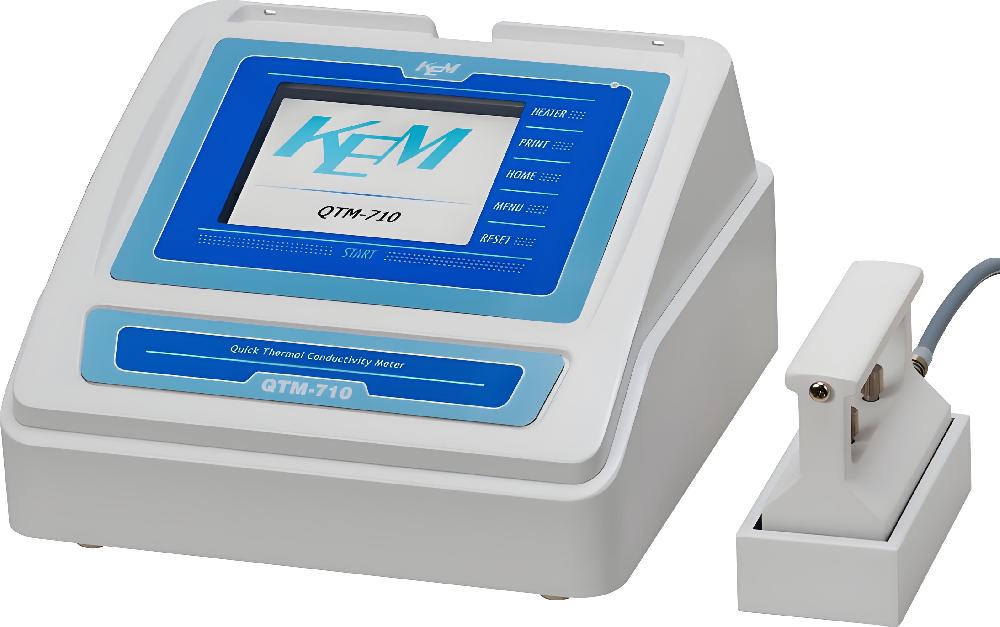
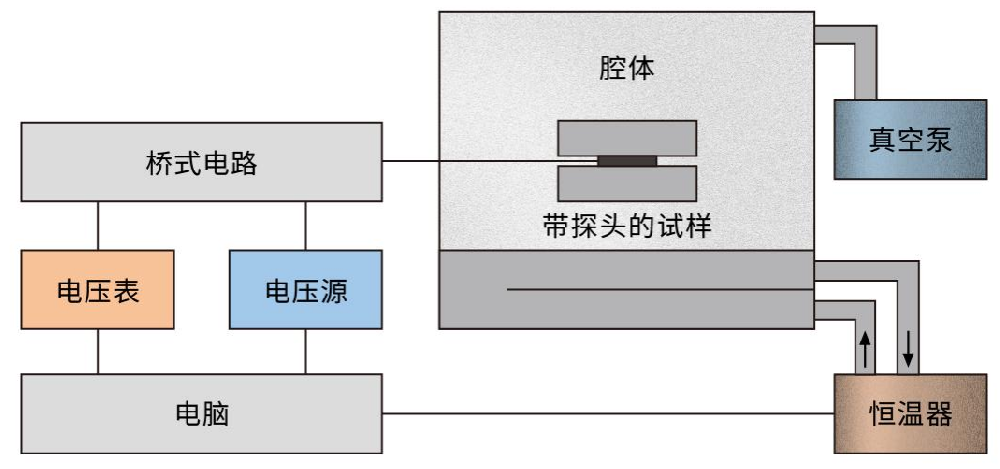
The Transient Plane Source (TPS) method is an absolute measurement technique that doesn’t require repeated calibration or standard samples. It can measure the bulk properties of materials with a wide range of thermal conductivities. The method uses a planar probe made of thermoresistive material, which acts both as a heat source and a temperature sensor, to determine the material’s thermal conductivity. Since the thermal resistance of alloys has a linear relationship with temperature and resistance, monitoring changes in resistance can accurately reflect the sample’s thermal performance.
The TPS method is simple to operate and provides quick results. It’s especially effective for small samples and anisotropic materials, and it’s less affected by external environmental factors. However, the accuracy of the test can be limited by equipment and operator skills, and the preparation of the sample and the position of the sensor significantly impact the results. Under room temperature and normal pressure conditions, the measurement error for thermal conductivity and thermal diffusivity can be kept within 5%, but the error increases significantly at higher temperatures.
Product inquiry