
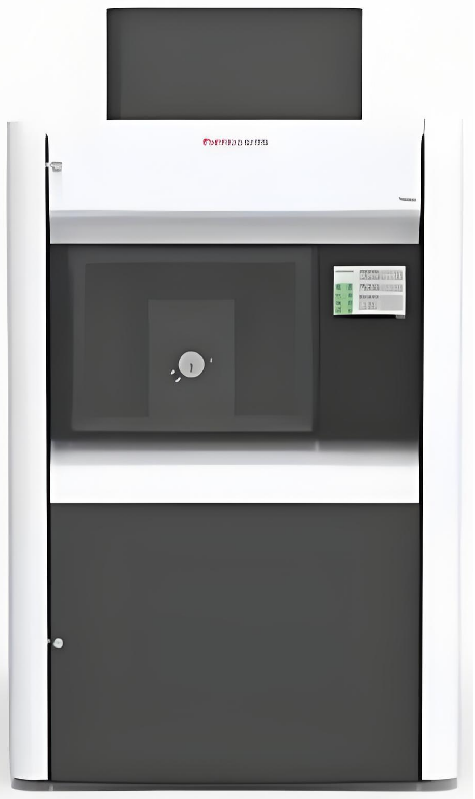
Brief description:A transmission electron microscope (TEM) creates images by shining an electron beam on a sample in a high-vacuum environment and detecting the electrons that pass through the sample. Using TEM imaging, we can see atomic columns in crystal samples and understand molecular mechanisms inside cells at a much more microscopic level. Because TEM uses a focused high-energy electron beam, it can reveal complex details of a sample that a light microscope can't show. In addition, TEM can provide information on the orientation of crystalline phases and elemental composition of a sample, except for the lightest elements (H and He).
Industry Applications:Observation of material layers and cross-sectional morphology, analysis of elemental composition.


Detailed
A transmission electron microscope (TEM) creates images by shining an electron beam on a sample in a high-vacuum environment and detecting the electrons that pass through the sample. Using TEM imaging, we can see atomic columns in crystal samples and understand molecular mechanisms inside cells at a much more microscopic level. Because TEM uses a focused high-energy electron beam, it can reveal complex details of a sample that a light microscope can't show. In addition, TEM can provide information on the orientation of crystalline phases and elemental composition of a sample, except for the lightest elements (H and He).
Product inquiry