
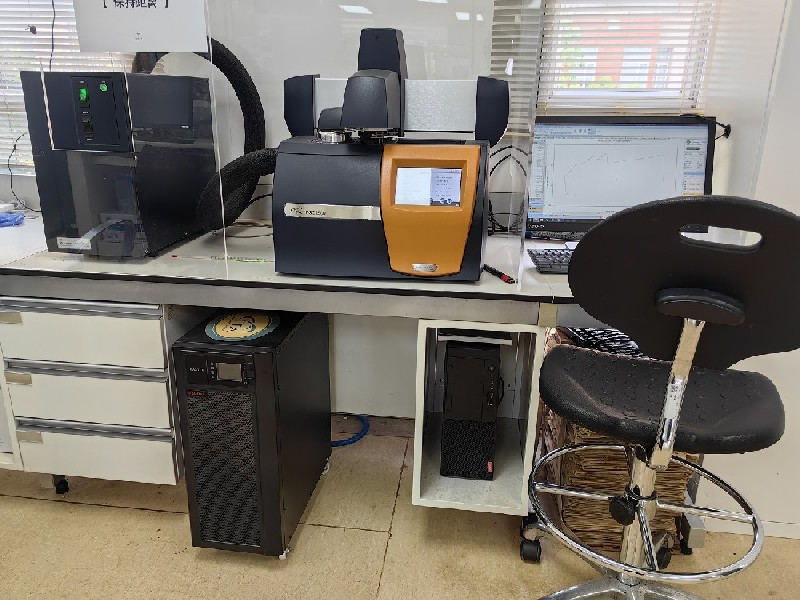
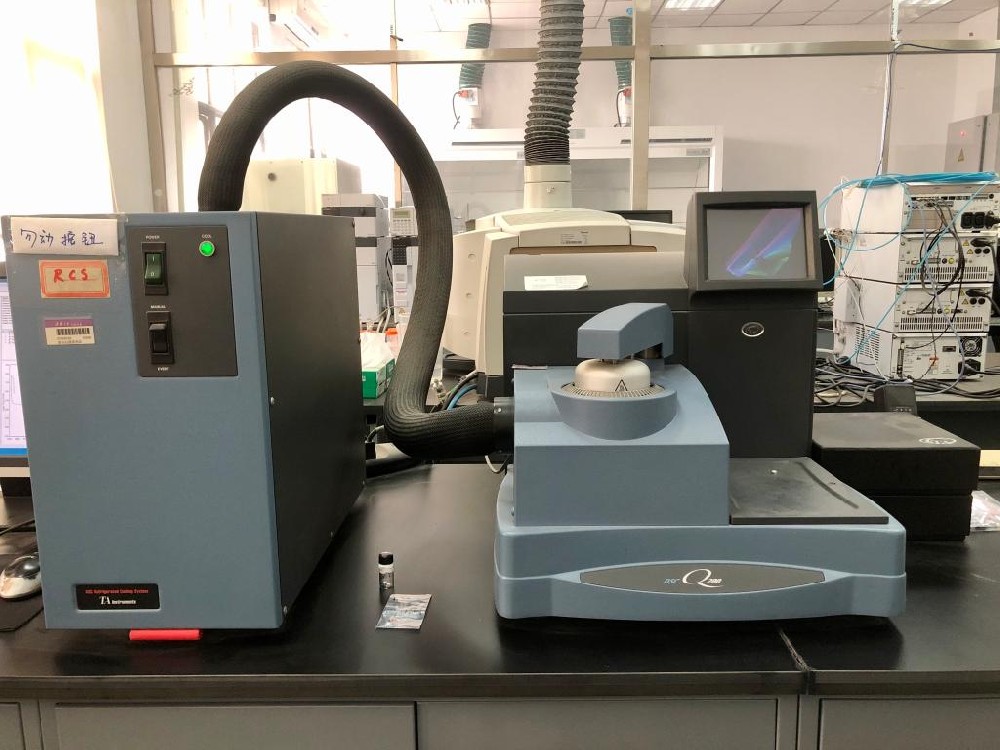
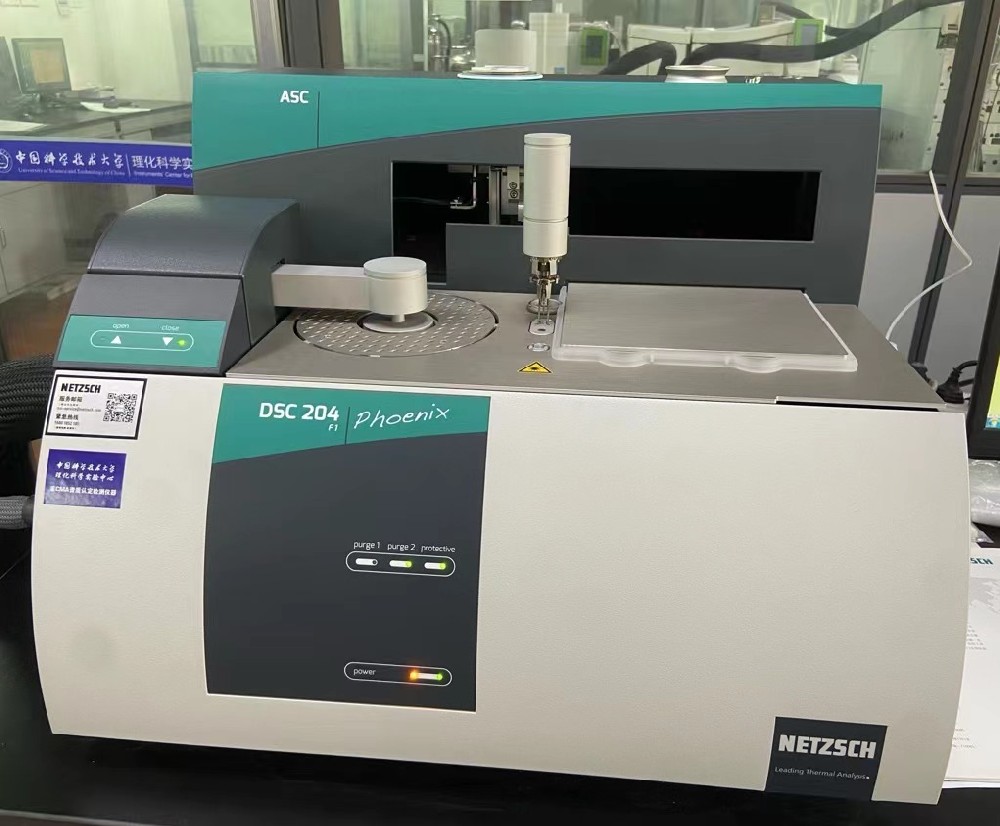
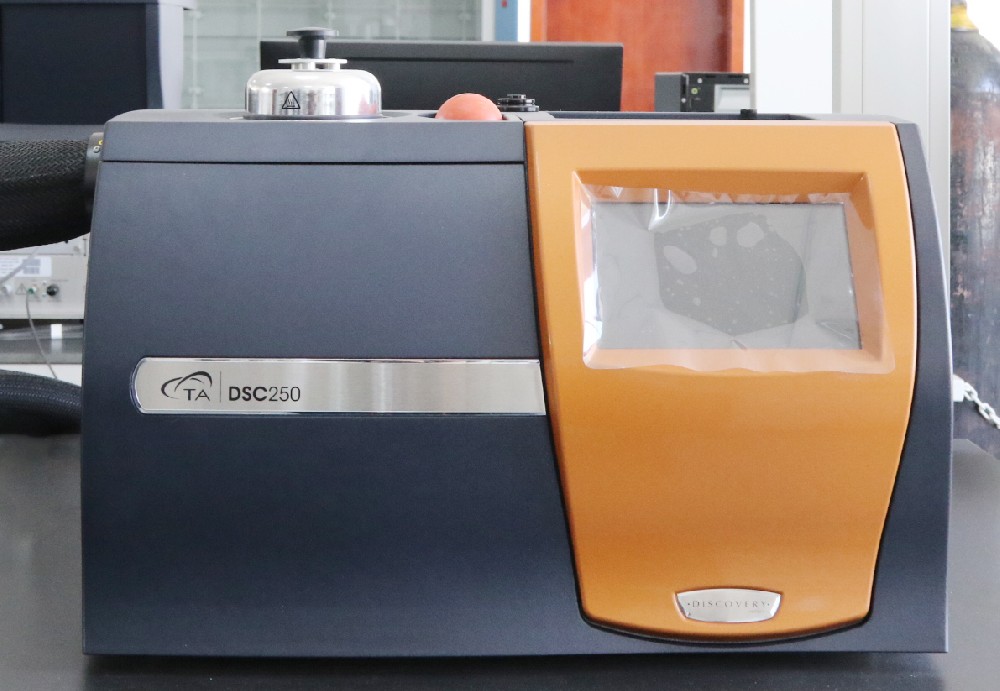
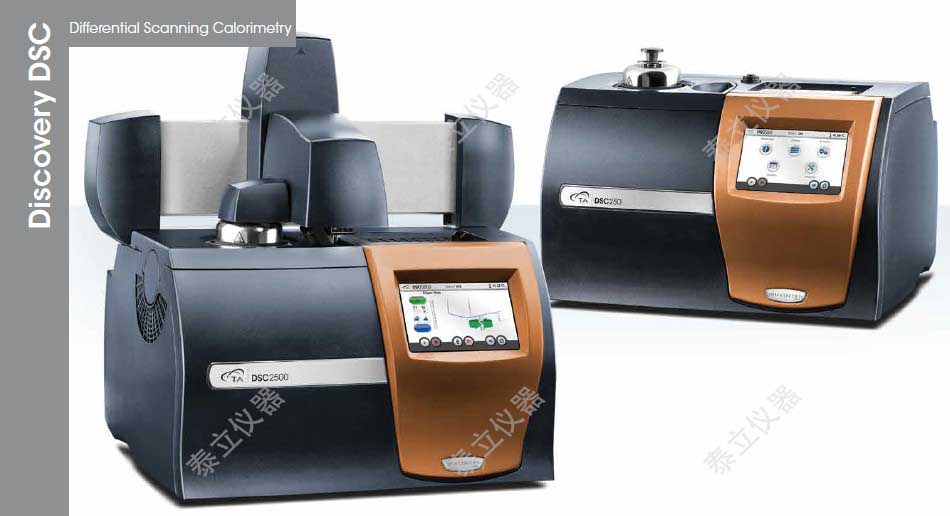
Brief description:Differential Scanning Calorimeters (DSC) are the most commonly used thermal analysis instruments in the adhesive industry, accurately measuring key parameters like Tg, Tm, Tc, curing heat, and OIT. Dehui represents the TA Instruments Discovery series DSC, which uses Tzero baseline correction and MDSC modulation mode, making it a core device for R&D and quality control of pressure-sensitive adhesives, hot-melt adhesives, and structural adhesives.
Industry Applications:Determination of the glass transition temperature (Tg) of pressure-sensitive adhesives/hot melt adhesives; analysis of the melting point and crystallization temperature of hot melt adhesives; study of curing kinetics for epoxy/polyurethane structural adhesives; consistency testing of Tg for polymer batches used in adhesives; testing the oxidation induction time (OIT) of polyolefin hot melt adhesives, and so on.
Detailed
Differential Scanning Calorimeter (DSC) is the most commonly used thermal analysis instrument in the adhesive industry, used to precisely measure the heat flow changes of materials during heating and cooling — including key parameters like glass transition temperature (Tg), melting point (Tm), crystallization temperature (Tc), curing exotherm, and oxidative induction time (OIT). The Discovery series DSC from TA Instruments, represented by Dehui, uses Tzero baseline correction technology and MDSC modulation mode to effectively separate subtle thermal events from the baseline. For pressure-sensitive adhesives, Tg directly determines room-temperature tackiness (Tg < -20°C usually means good initial tack); for hot melt adhesives, melting and crystallization behavior affects open time and bonding strength; for epoxy/polyurethane structural adhesives, the curing exotherm curve reveals the optimal curing temperature and time — one Tg value often determines the adhesive’s application scenario.
Industry applications:
- Pressure-sensitive/hot melt adhesive glass transition temperature (Tg) measurement — correlates with initial tack and low-temperature performance
- Hot melt adhesive (EVA/PO/PA/PUR) melting and crystallization temperature analysis — optimizes coating temperature window
- Epoxy/polyurethane structural adhesive curing kinetics study — determines optimal curing temperature and degree of reaction
- Thermal history and batch Tg consistency check of polymer raw materials for adhesives (resins, elastomers)
- Polyolefin hot melt adhesive oxidative induction time (OIT) test — evaluates thermal stability
Product inquiry